CLIENT
Porsche Digital
Final project of my Master's Degree in UX Design, the project explores how autonomous vehicles can shift from simple means of transportation to emotional and functional spaces.
CLIENT
TIMELINE
TEAM
ROLE
Full product lifecycle with a focus on:
Porsche Digital challenged me and my teammates to look ahead:
What will the future of mobility look like in terms of experience? What if moments in transit weren't passive, but deeply engaging?
We had to design for a speculative world (Level 5 autonomous vehicles), while remaining true to Porsche's exclusive brand, and Porsche Digital's cutting-edge product ecosystem.
Today cars are parked 95% of the time. The limited time spent inside rarely offer value beyond mobility.
(source: Fortune Magazine)The number of autonomous vehicles (AVs) is growing, with sales projected to reach 58 million by 2030.
(source: market.us)Our investigation began with a clear question in mind, framed as such:
What if a car was more than just a vehicle?
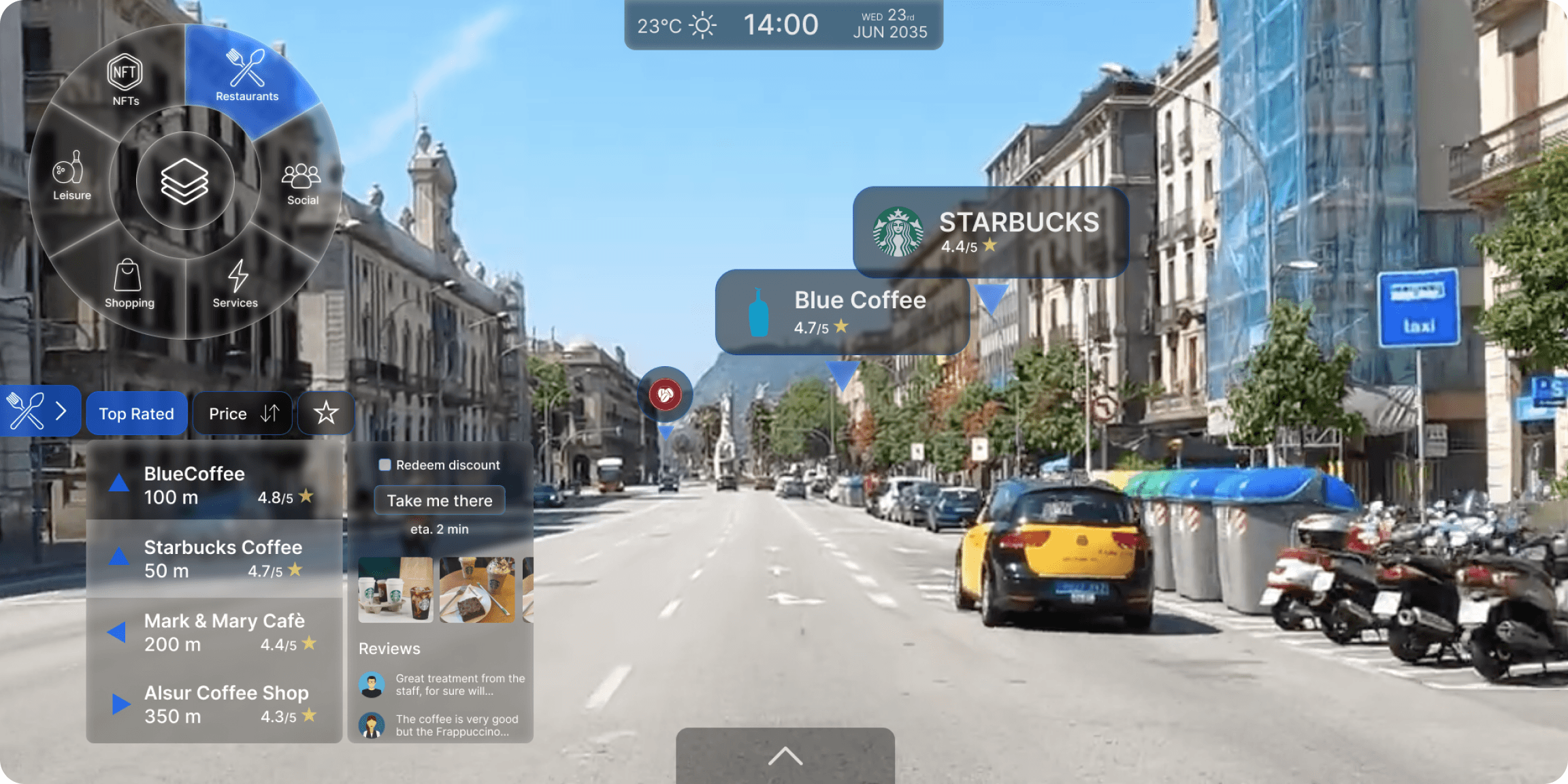
The solution we crafted, iteration after iteration, was Beyond, a car-embedded platform that enhances the passenger journey through AR layers, immersive content, and exclusive experiences. This happens through an AR technology layer embedded in the windshield - it might sound unrealistic, but our competitor analysis revealed otherwise!
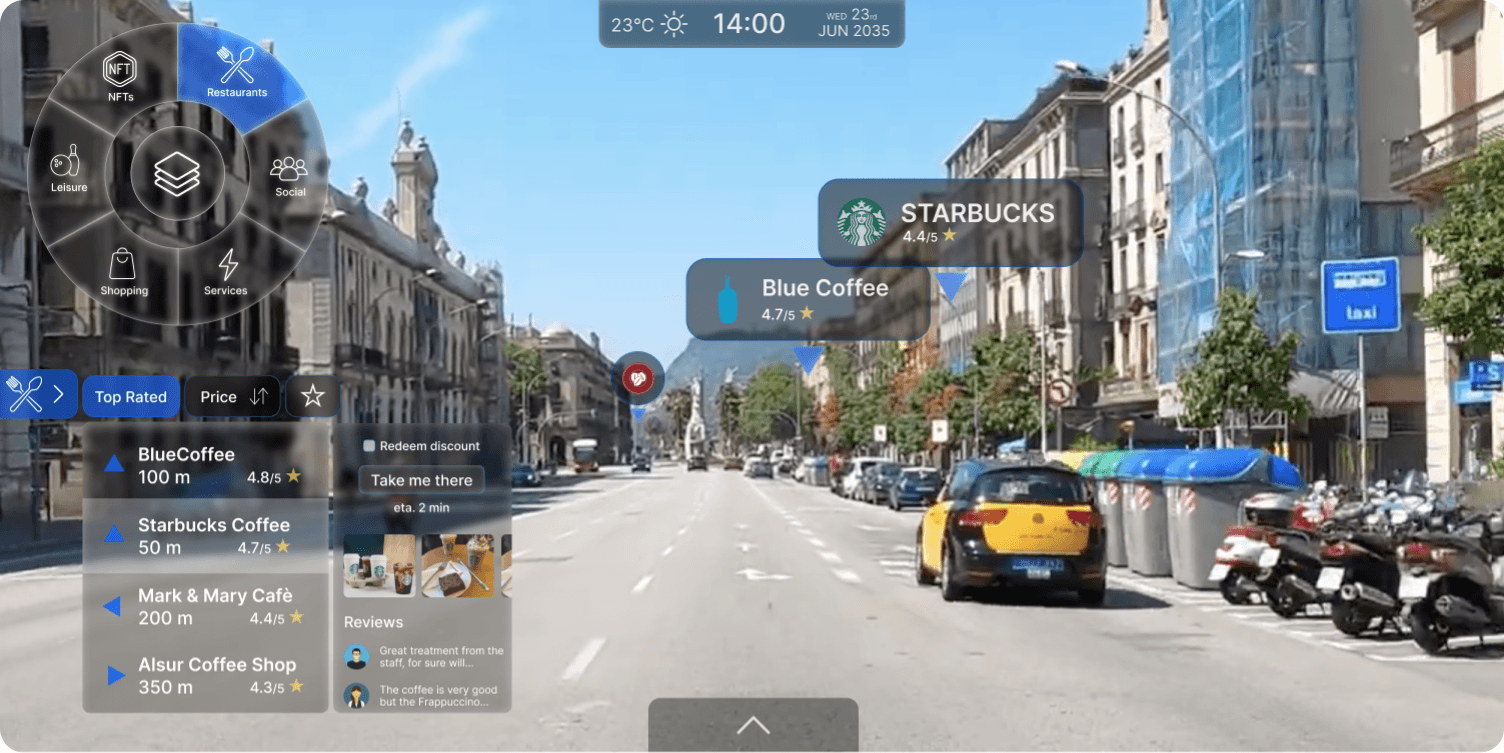
The different types of "layers" displayed in the AR windshield can be easily switched on and off, according to user preferences. The whole system itself can be turned off for users to enjoy a quiet ride if they please.
Functional Layers
Discover the surroundings as you pass by - find restaurants, purchase goods or learn about points of interest - or perform a wide variety of work-related or productivity tasks, such as joining virtual meetings.
Entertainment & Social Layers
Travel to collect unique NFTs in specific points of interest, join exclusive community events to interact with fellow community members in a hybrid way, or simply experience the magic of playing games on your windshield.
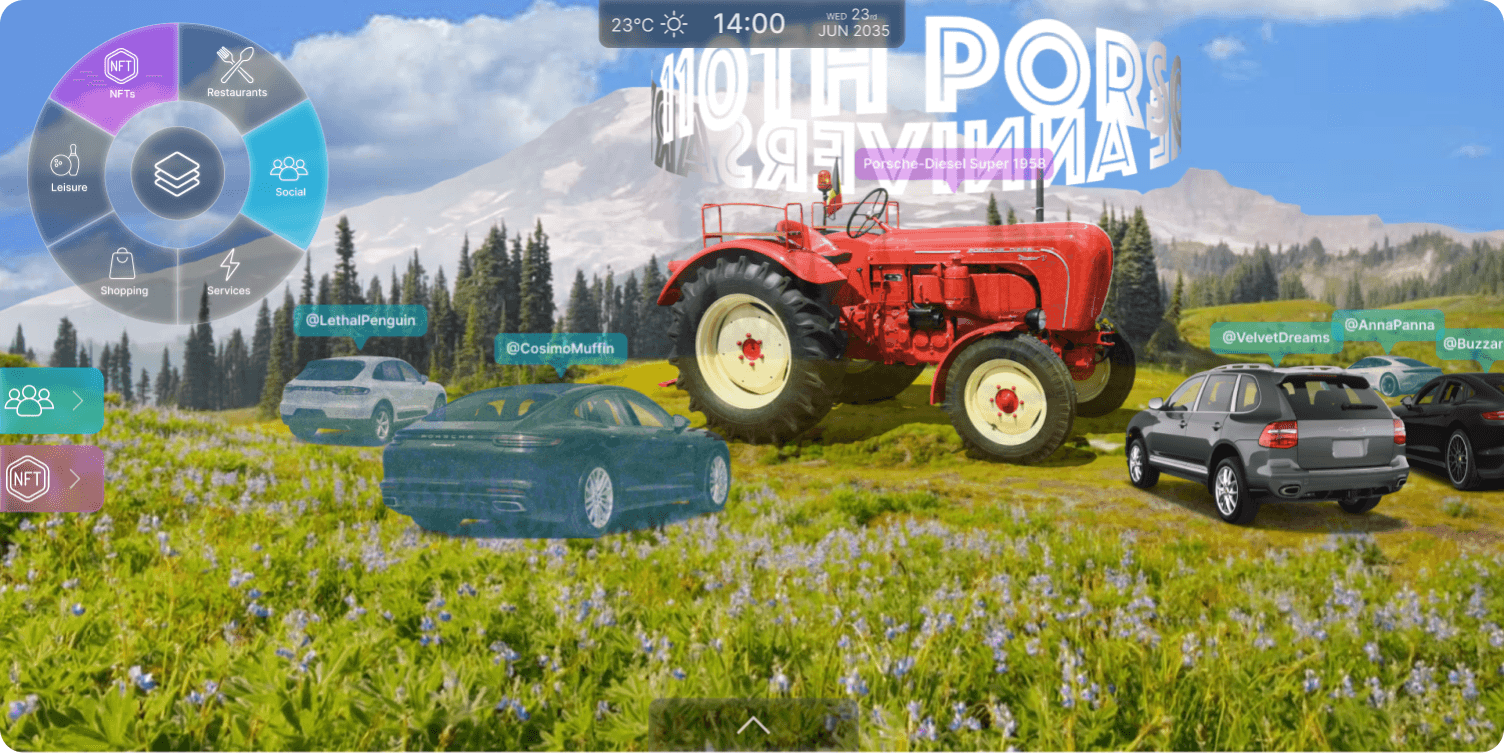
Despite the speculative nature of the project, our outcomes were tangible:
Usability score: 4.2 / 5 average across testing sessions.
User feedback: Positive feedback on clarity, control, and personal relevance.
Business validation: Porsche Digital saw Beyond as a credible future use case to strengthen customer loyalty.
Design recognition: The concept demonstrated how digital and physical experiences can merge without losing the human element.
Our process might have been linear, in the "academic" style - we followed the Double Diamond framework - but it was not a straightforward one, given the speculative nature of the project.
Among doubts, small failures and untested assumptions about the future, what really kept us grounded and moving forward was relying on user feedback and referencing competitors' work.
The goal at this early stage was to uncover expectations, fears and desires around in-car digital experiences, and to test the hypothesis that passenger time in autonomous cars could be more pleasurable if paired with meaningful activities.
Our early research consisted of:
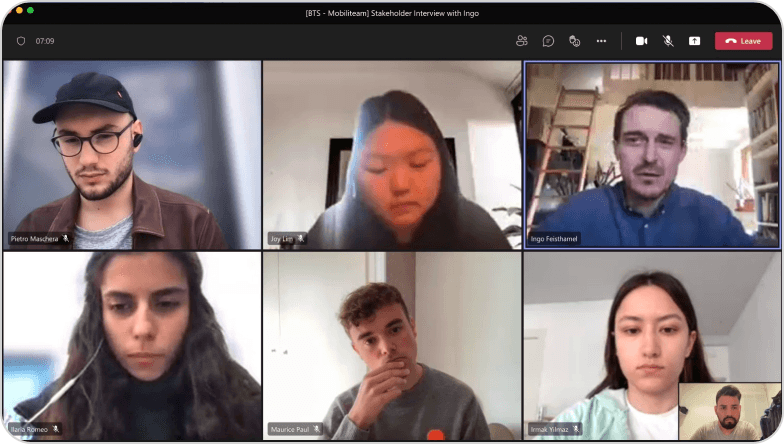
Stakeholder Interview with Ingo Feisthamel, Head of UX at Porsche Digital
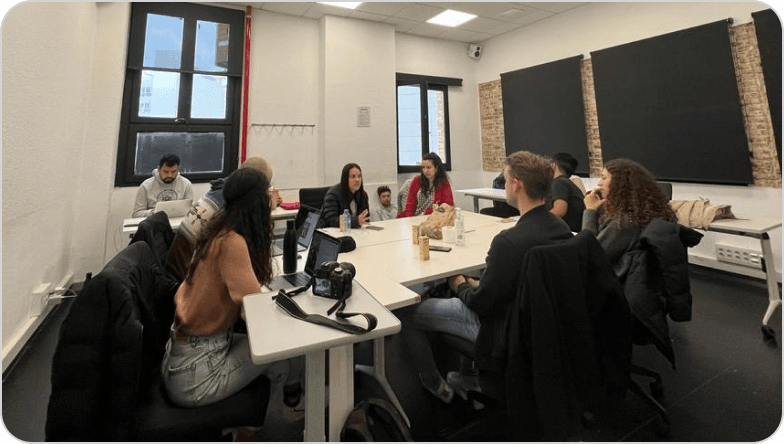
Focus group conducted in-person with 6 participants
The data revealed three strong drivers:
Design for adaptability. Let passengers shape their own experience.
We discovered a key paradox: people crave connection but also moments of quiet. They want choice - to decide when to engage and when to withdraw.
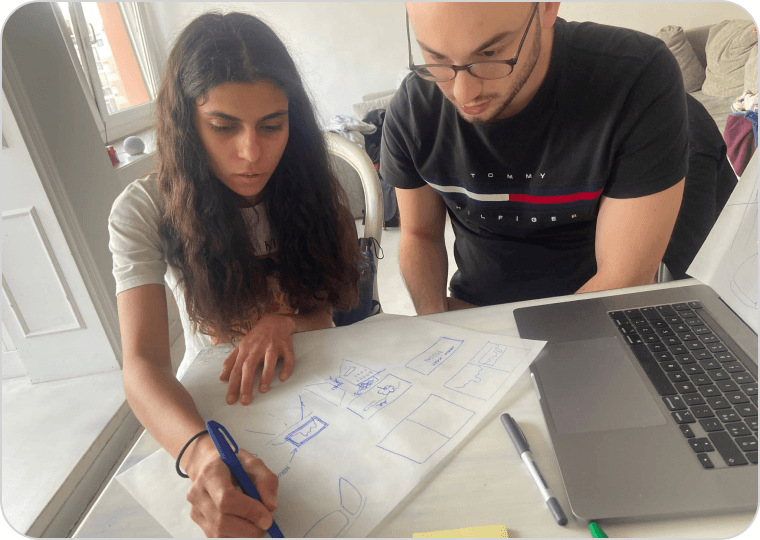
Working session with teammate
Comfort over Novelty
We placed AR on the windshield, rather than on wearables - it reduced friction, respected passenger comfort, and kept interactions more natural and smooth.
Familiarity to build trust
Borrowing smartphone logic - grids, icons, simple flows - made the system intuitive from the start.
Personalization as luxury
Passengers can switch between exploration, entertainment, information, or silence - control was the main point, rather than noise.
Usability over futurism
Clear layout, restrained visuals, and natural gestures kept AR useful rather than overwhelming.
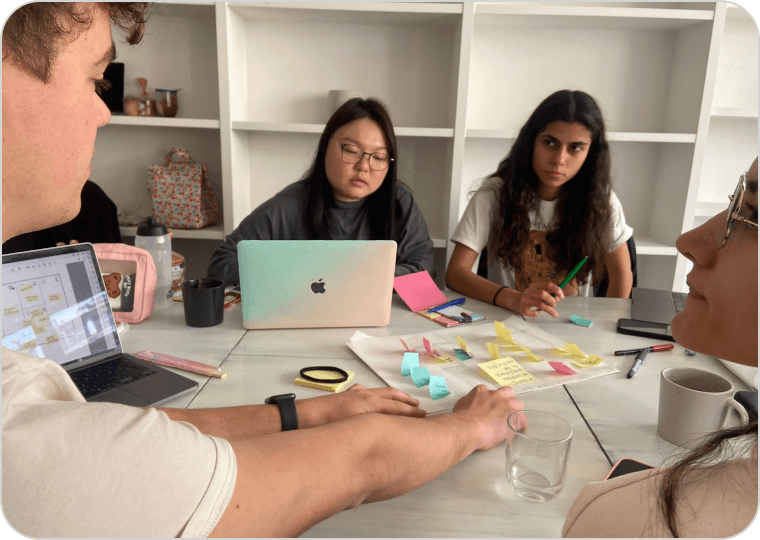
Group ideation session
We tested both low and high-fidelity prototypes with 11 participants across 2 rounds. This validation loop helped us focus the MVP on functionality and exploration, narrowing down the many ideas we had in mind to the ones that really resonated with our target users.
Low-fidelity testing, focused on concept validation
The first round of user testing aimed at validating with our target users the main layers of the solution ecosystem, covering both functional and entertainment features.
Key insights:
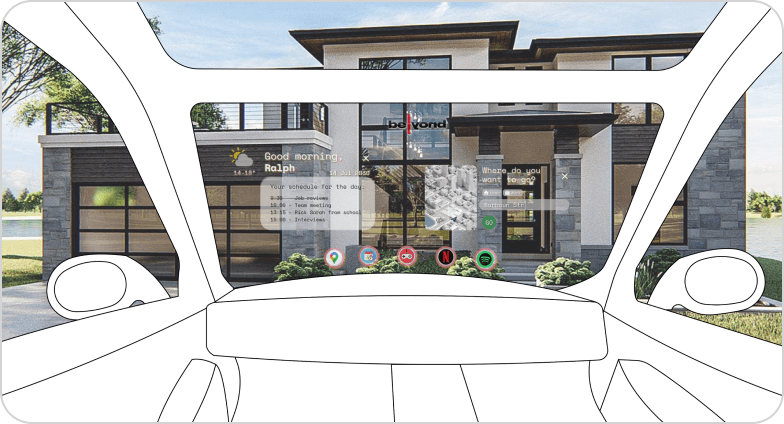
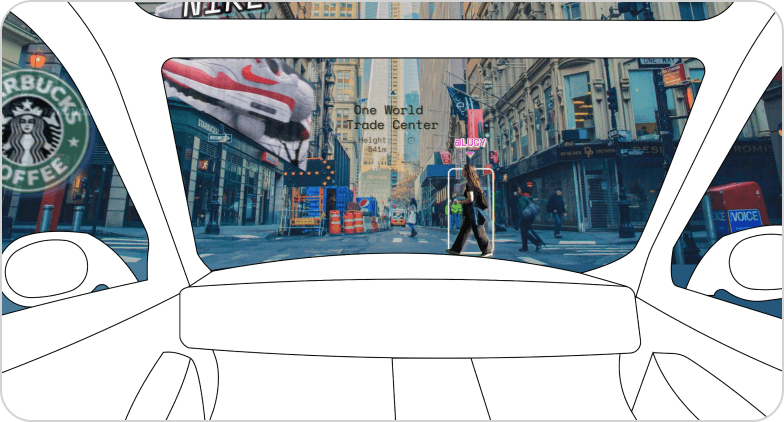
Low Fidelity mock-ups for concept validation
High-fidelity testing, focused on usability
Our second round of testing focused mostly on validating the user flows of the main features, as well as the accessibility and usability of the UI.
Key insights:
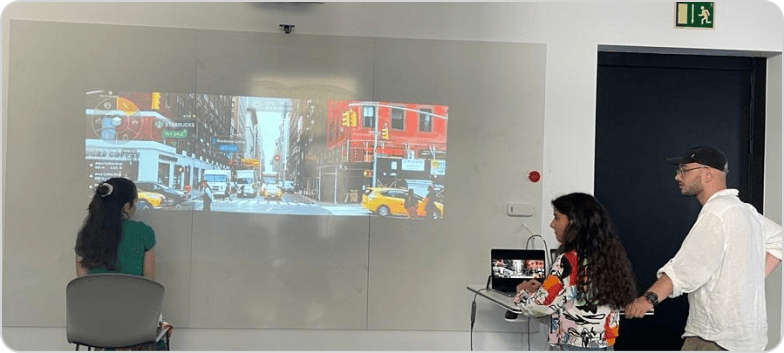
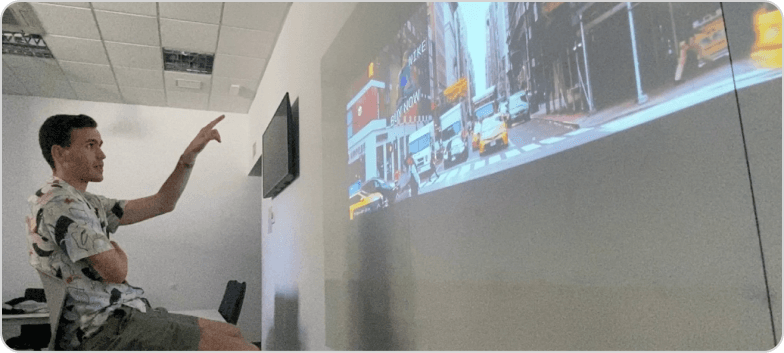
Testing high fidelity prototype in a simulated environment
Porsche saw Beyond as more than an interface - a way to extend its brand into the future of mobility. The concept aligned with two strategic priorities:
Deepening brand loyalty — Exclusive in-car experiences and events to strengthen Porsche communities.
Reaching new audiences — A flexible, immersive experience appealed to younger users and more women - key growth segments.
The concept opens new, asset-light sources of income:
Beyond was the results of a challenge that wanted to push us students to think of user experience in broader terms - broader than "just another app". It represented a fun but challenging exercise in designing for moments that don't yet exist - a test of foresight and empathy.
This project left me with a sharper sense of how design can shape not just interfaces and experiences, but the future itself. Of the many lessons learned, these are the ones that stand out:
If I worked on Beyond in 2025, the process would somewhat look different. Although the core vision would mostly remain the same, the tools - and the cultural landscape around emerging tech - have changed a lot.